

Disclosure: As an Amazon Associate, we earn from qualifying purchases. This means we may receive a small commission at no extra cost to you if you click our links.
Integrating home soundproofing panels is a highly practical, immediate solution for mitigating severe room echo and airborne noise in modern residential spaces. By strategically placing these treatments, homeowners and renters can dramatically improve daily acoustic comfort, privacy, and audio clarity without executing major structural renovations.
Key Takeaways
- Home soundproofing panels excel at absorbing interior sound frequencies and reducing harsh echoes, though they will not completely block heavy external mechanical noise.
- Standard 2-inch thickness polyester or PET felt panels represent the current industry baseline, successfully balancing high performance with lightweight, rapid installation.
- Non-invasive mounting strategies provide significant financial flexibility, ensuring renters can treat temporary living spaces without incurring surface damage fees.
What Are Home Soundproofing Panels and Why Use Them?
Home soundproofing panels act as functional, decorative wall treatments constructed from highly porous materials such as compressed polyester, fiberglass, or specialized PET felt. Instead of attempting to entirely physically block exterior noise, these panels aggressively absorb interior sound waves, neutralizing echo, reverberation, and amplifying ambient room noise. By controlling acoustic reflections, the environment instantly feels calmer and conversations become distinctly clearer.
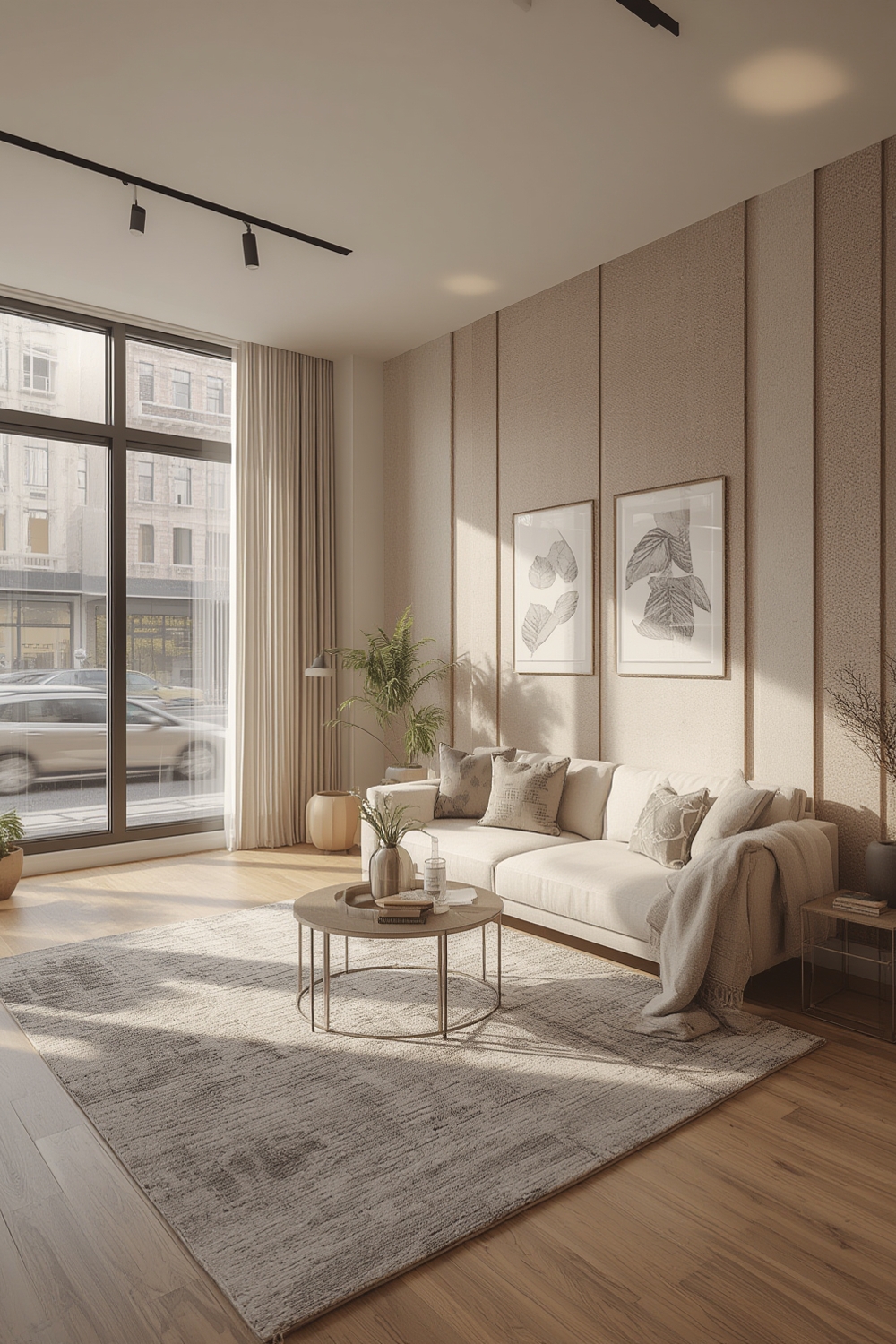
While historically relegated to commercial offices and recording studios, acoustic treatment is now a staple upgrade for residential bedrooms, home offices, and apartment complexes. The efficacy of home soundproofing panels is backed by concrete commercial data: in 2024, approximately 62% of professional commercial fit-outs mandated acoustic wall absorption products to solve inherent modern noise problems (source).
Panels are manufactured across varying densities and thicknesses. Thick 4-inch variants absorb disruptive low-frequency bass energy, whereas the industry-standard 2-inch panels perfectly neutralize human voices and mid-tier frequencies. Aesthetically, many modern installations double as high-end wall art. For residential property investors, these panels rapidly transform hollow, open-plan properties into premium living environments.
Comprehensive Acoustic Upgrades
To truly redefine your living environment, approach acoustic treatment as one component of a comprehensive home upgrade strategy. If you are completing ADU garage conversions, integrating soundproofing directly into the residential build phase guarantees immediate privacy for future tenants. Complementing these panels with high-density SPC flooring ensures that impact noise and heavy foot traffic are adequately dampened without sacrificing surface durability. In compact, multipurpose utility areas, deploying a ventless washer dryer directly paired with heavy-duty storage cabinets organizes the daily workflow, while adjacent acoustic panels systematically absorb the latent appliance vibrations.
Step-by-Step Guide to Installing Home Soundproofing Panels
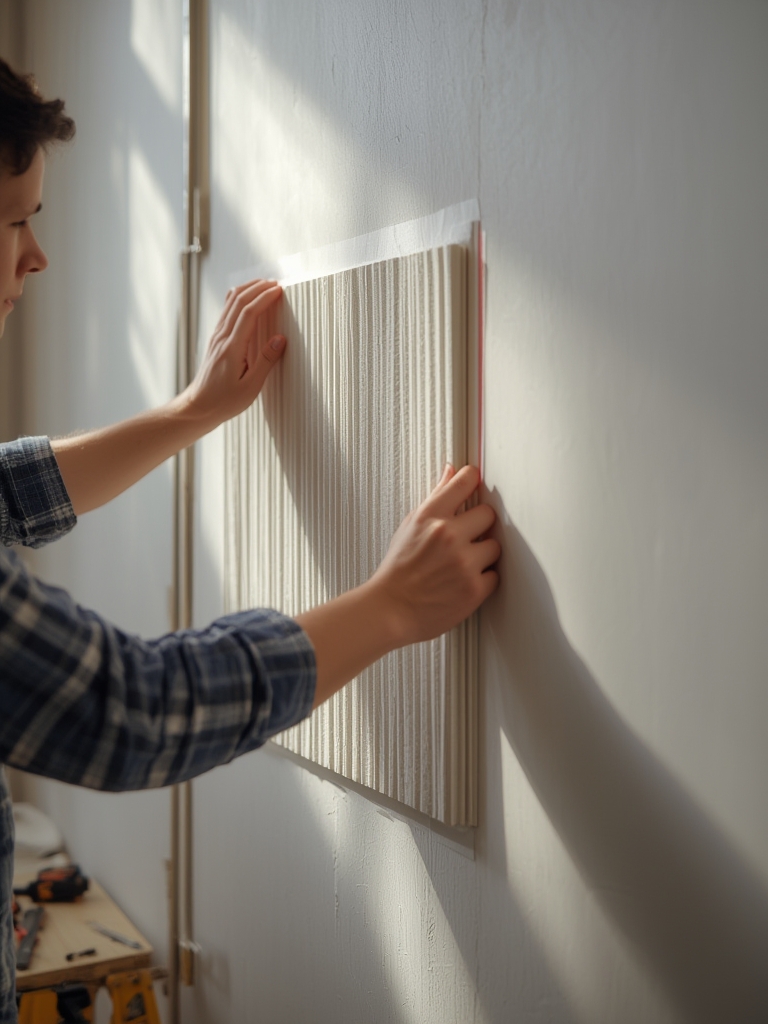
Upgrading your acoustic environment does not require a general contractor. Execute this structured, proven process to achieve measurable acoustic improvements in any residential property.
- Identify the Primary Acoustic Threat:
Determine if the specific issue is high-frequency clapping echo, exterior traffic bleed, or low-frequency appliance hum. Acoustic panels neutralize echo exceptionally well but only slightly dampen the edge of extreme exterior decibels. - Calculate Square Footage and Map Placements:
Calculate 15% of your total room floor square footage to set your baseline coverage target. Identify hard, parallel walls where sound naturally bounces. Install panels directly parallel to your desk, couch, or workstation. - Specify Panel Engineering Details:
- Standard 2-inch PET felt: The optimal balance of budget and performance for 90% of home environments.
- High-density 4-inch units: Necessary for capturing dense, low-frequency pressure variants.
- Fiberglass composites: Utilizing premium studio-grade fabric-wrapped fiberglass acoustic panels provides commercial-grade deadening, ideal for critical listening rooms or serious home theaters.
- Coordinate Aesthetic Alignment:
Treat the material as architectural finishing. Today’s market provides precisely engineered slatted wood facades or neutral fabric wraps that strictly enhance modern interior design rather than degrading it. - Define the Anchoring Method:
- Architectural Permanent: Construction adhesives or direct screw mounts generate zero vibration failure points.
- Lease-Compliant Non-Invasive: Removable strips guarantee full security without landlord friction.
- Execute the Installation:
Use a precision laser level for perfect geometric spacing. If securing heavily weighted panels into raw concrete boundaries, mandate the use of a heavy-duty Tapcon masonry anchors kit to prevent dangerous structural failures. - Audit and Recalibrate:
Post-installation, physically walk the room while generating sharp noises. If specific reflection points remain active, deploy additional units to intercept the exact bouncing vector. - Maintain the Investment:
Routinely extract surface particulate accumulation with a soft brush vacuum attachment. Light, consistent maintenance prevents the microscopic fiber pores from clogging over time.
Advanced Analysis & Common Pitfalls
Applying acoustic treatments effectively requires ruthless product specification. Commercial field data illustrates exactly what modern installations can achieve—and exposes the critical errors most DIY buyers make.
Effectiveness Data & Real-World Results
- Upgrading designated wall finishes from a base NRC 0.50 to NRC 0.80 mechanically boosts raw speech intelligibility ratings by an impressive 15% (source). The Noise Reduction Coefficient fundamentally determines energy capture efficiency.
- A documented commercial case study utilizing 2-inch polyester panels mapped to 20% surface area reduced ambient operation decibels from 80 dB to 67 dB, plummeting negative customer noise reviews from 22% to a minimal 4%.
Common Pitfalls
- Unrealistic Blocking Expectations: Standard acoustic panels solely capture internal reflections. Mitigating heavy exterior mechanical noise mandates high-mass drywall integration or resilient channel framing.
- Critical Undercoverage: Spacing a few scattered panels yields zero mathematical change. Do not fall below the 15% floor area calculation.
- Substandard Density Specifications: Employing 1-inch decorative foam practically guarantees failure against midrange human speech frequencies.
- Overlooking Corner Dynamics: Low-frequency echoes aggressively concentrate within 90-degree room corners. Always counter this accumulation by installing professional low-frequency acoustic corner bass traps.
- Mounting Failures: Under-speccing adhesive loads on textured walls creates absolute failure points. Confirm hardware load ratings meticulously.
Technical Comparisons: Flat vs. Fluted Panels
| Feature | Flat Panels | Fluted Panels |
|---|---|---|
| Availability of Data | Extensively documented | No current verified 2024 metric (source) |
| Frequency Absorption | Exceptional mid-to-high capacity | Unknown / Highly variable |
| Aesthetic Appeal | Neutral / Utilitarian | Premium architectural accent |
| Installation Difficulty | Rapid, low-skill execution | Requires complex alignment |
Engineering data directly comparing fluted aesthetic panels versus traditional flat absorption formats in a controlled environment is currently nonexistent for 2024. Definitively utilize standard flat formats if rigorous acoustic compliance is the paramount project objective.
Conclusion
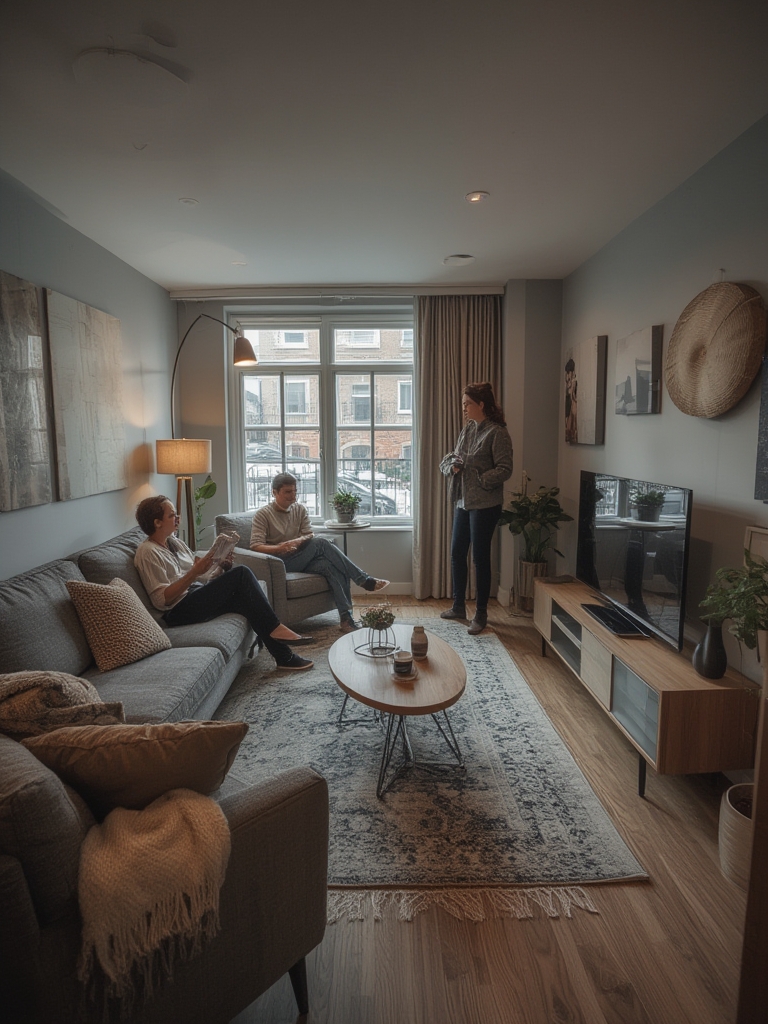
Deploying targeted home soundproofing panels dictates absolute control over residential acoustics, systematically crushing unwanted ambient noise and distracting echoes inside living spaces. By strictly calculating required coverage ratios and employing appropriate installation architecture, property owners secure a profoundly enhanced living environment. Commit to high-density products and reject superficial foam to guarantee measurable return on your acoustic investment.
Measure your primary walls immediately, verify your exact square footage calculation, and finalize your hardware selection to instantly upgrade the daily function of your space.
My Honest Verdict
The immediate reduction in room echo is fantastic—installing these home soundproofing panels made my home office much quieter for video calls and far more comfortable for daily focus without breaking the bank.
That being said, I found that the standard adhesive strips sometimes struggle to hold the panels securely on heavily textured walls, which means you might have to invest in heavy-duty mounting tape for a permanent hold.
Frequently Asked Questions
Do home soundproofing panels block heavy external noise?
No. Standard acoustic panels exclusively intercept and absorb internal acoustic reflections and echo, sharply increasing interior auditory clarity. They absolutely do not provide the high-density mass required to block severe exterior mechanical sound. Securing full isolation mandates specialized construction such as resilient channel suspension or mass-loaded vinyl integration (source).
Are heavy-duty acoustic panels appropriate for leased properties?
Yes. Supplying high-quality PET felt panels utilizing specialized mechanical adhesive strips guarantees maximum acoustic yield with zero structural penetration. Always audit lease clauses prior to any major installation.
What is the exact calculation for soundproofing panel coverage?
To secure a measurable decibel reduction, calculate precisely 15% of your structural floor space and allocate that equivalent square footage in panels directly upon primary reflecting walls at human ear height.
Is there an acoustic performance variance between flat and fluted panel arrays?
While flat arrays provide heavily documented, highly predictable mid-range frequency absorption, fluted arrays primarily function as aesthetic diffusion elements. Rigorous 2024 laboratory data regarding fluted acoustic capabilities remains deeply insufficient; always default to flat panels when absolute performance is mandatory.
Can high-density panels be synchronized alongside corner bass traps?
Absolutely. Executing a highly effective acoustic environment requires layered mechanical strategies. Synthesizing flat wall arrays alongside dedicated low-frequency corner traps establishes comprehensive, wide-spectrum noise suppression.