

Disclosure: As an Amazon Associate, we earn from qualifying purchases. This means we may receive a small commission at no extra cost to you if you click our links.
An infrared sauna room provides a highly practical, on-demand wellness experience right inside your home. However, before investing in this upgrade, you must look past aggressive marketing claims to understand the real installation costs and daily operational requirements. This guide cuts through the noise, providing the hard facts you need to decide if an infrared sauna is truly a smart addition to your property.
Key Takeaways
- Interest in at-home infrared sauna rooms is surging across the U.S., with consistent double-digit market growth projected through 2035.
- The actual cost for a 2-person sauna varies significantly between DIY kits and professional installations, and buyers frequently overlook ongoing electricity expenses.
- Crucial factors such as energy consumption, smart home compatibility, and potential property value impact are often ignored but ultimately determine if this investment is worthwhile.
Infrared Sauna Room Explained: What and Why
Unlike traditional steam saunas, an at-home infrared sauna room relies on radiant panels that emit infrared wavelengths to heat your body directly. Homeowners prefer these compact modular systems for muscle recovery and stress relief, precisely because they avoid the moisture-related structural issues associated with steam setups.
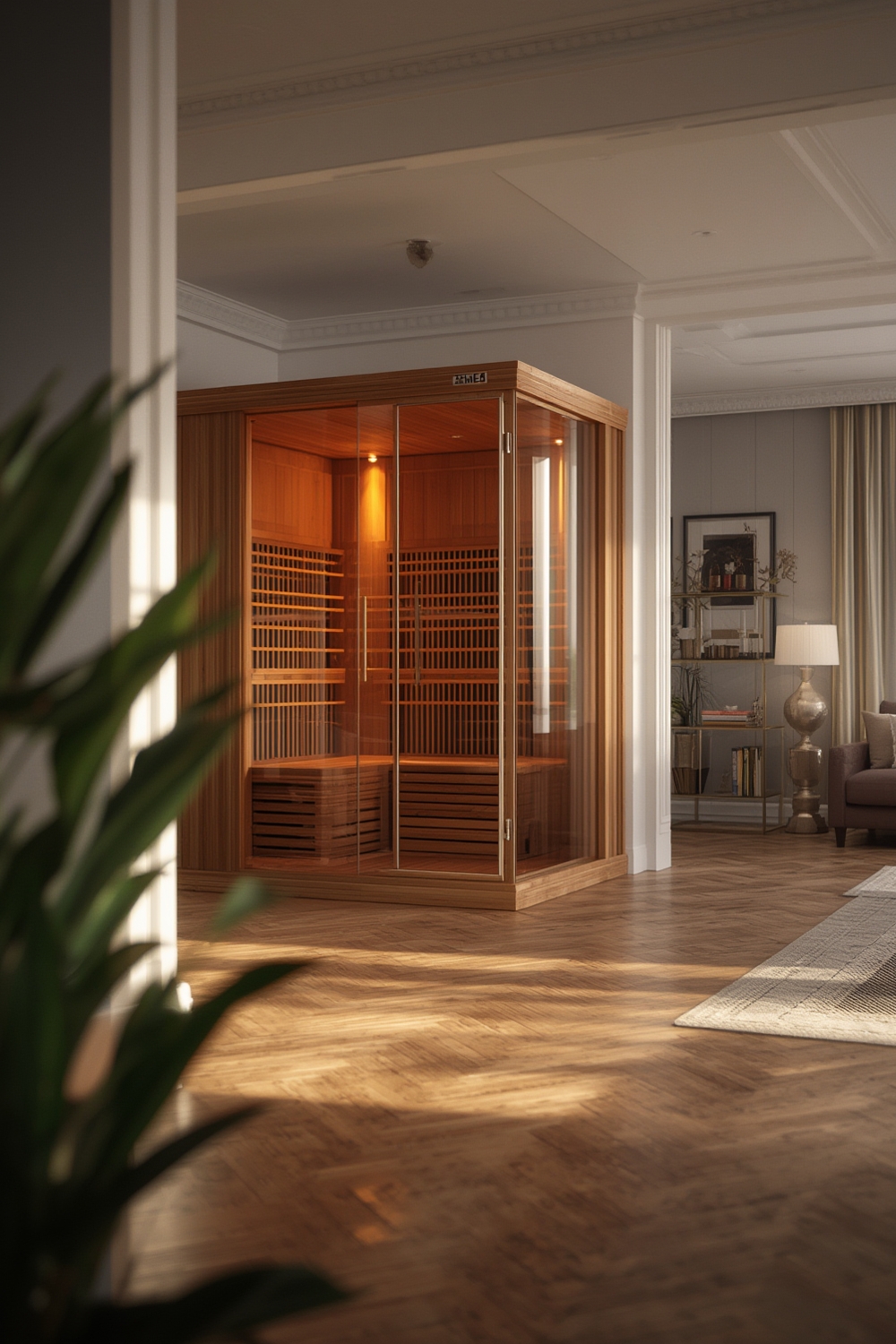
The market demand is massive. In 2024, the U.S. infrared sauna market reached $220.55 million, and residential installations are expected to double over the next decade as wellness technology becomes a standard home upgrade (source). Search interest has climbed over 40% year-over-year, confirming that buyers prioritize convenience and privacy when integrating wellness tech (source).
Because they do not require plumbing, infrared units plug into standard or dedicated household circuits, requiring substantially less preparation than steam alternatives. Options range from portable tents to fixed wooden cabins, where a high-quality premium 2-person complete DIY cedar cabin can offer performance rivaling professional installations. However, knowing which option suits your home—and identifying the hidden catches—is critical.
Maximizing Your Space: A Comprehensive Approach to Upgrades
If you are planning to add an infrared sauna, consider looking at your renovation holistically—especially if you are working with an underutilized space. Many property owners find that executing garage conversions to ADUs provides the perfect opportunity to integrate a wellness corner without sacrificing interior square footage. To ensure the environment remains durable and visually appealing, upgrading to SPC flooring handles foot-traffic and temperature shifts effortlessly. You can further elevate the aesthetic from a basic garage to a modern retreat by installing fluted wall panels. For ultimate functionality, pairing your sauna area with a compact ventless washer dryer and organizing the perimeter with heavy-duty storage cabinets turns a simple utility room into an incredibly efficient, high-value asset.
Step-by-Step Guide: Installing an Infrared Sauna Room
- Assess Your Space Needs and Goals
Determine exactly where the sauna will reside—such as a garage, basement, or bathroom. A standard two-person cabin requires a minimum footprint of 4′ x 4′. Ensure you account for ceiling clearance, accessibility, and proximity to electrical outlets. - Compare Portable vs. Fixed Sauna Rooms
Portable models have lower upfront costs and are easy to relocate, but permanent sauna rooms provide superior durability, heat retention, and a much better aesthetic integration. - Calculate True Cost (DIY vs. Pro Install)
- DIY Sauna Kit Price Range: $1,100–$4,000 for a 2-person model, plus $150–$600 for tools and necessary sealants.
- Professional Install: $3,500–$8,000+ including delivery, structural preparation, and warranties.
- Ongoing Expenses: Increased utility bills (detailed below), replacement panels ($100–$500), and potential electrical permit fees.
- Check Local Permitting and Code Requirements
While many municipalities do not require permits for standard 120V plug-in units, hardwired setups or dedicated circuit installations inevitably require electrical permits. Always confirm specific requirements with your city inspector before making a purchase. - Install and Safety-Test Your Sauna
Strictly follow the manufacturer’s manual or hire a licensed electrician to verify wiring and capacity. Always use dedicated electrical circuits, and utilize a weather-resistant 15A GFCI outlet receptacle when required. Run the sauna empty for 30–60 minutes at maximum heat to off-gas any manufacturing odors and ensure breakers do not trip.
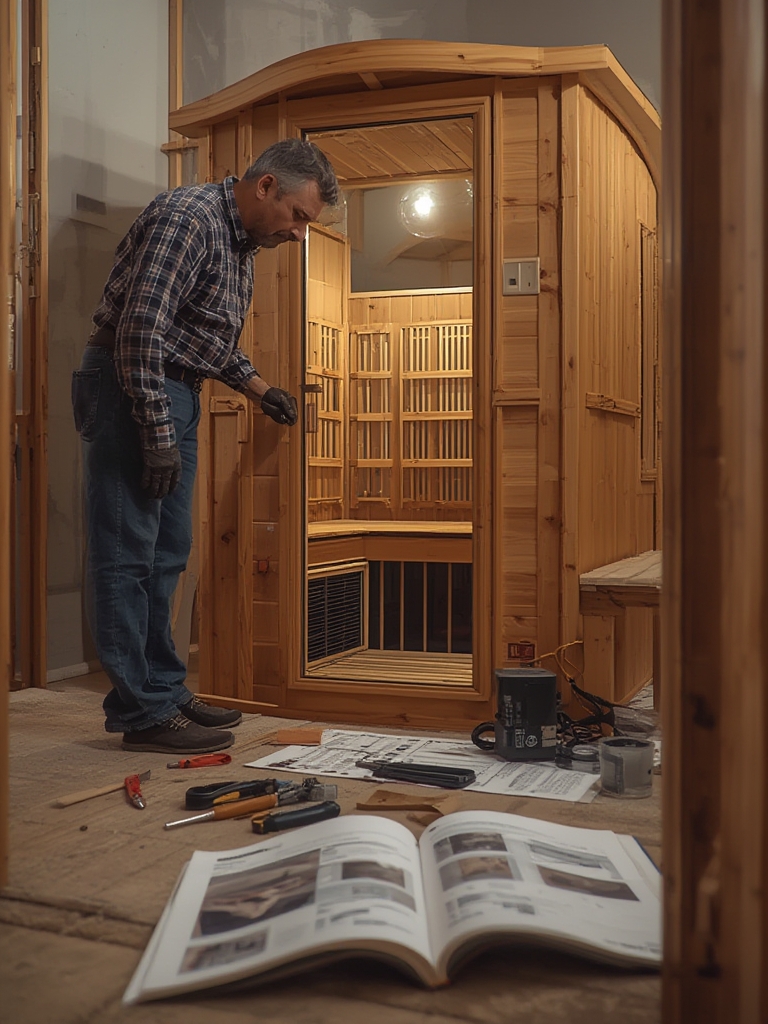
Keep in mind that while infrared units are quieter than steam generators, some proprietary panels still emit a low hum. If acoustic control is necessary, installing a professional-grade 12-pack acoustic foam panel kit on adjoining walls is a smart solution.
Advanced Analysis & Common Pitfalls
No major installation is without complications, and buyers routinely underestimate long-term ownership requirements. Below are the primary mistakes that generic guides frequently overlook:
- Electrical Surprises: Even “plug-in” units can necessitate comprehensive wiring upgrades if your current electrical circuits are already operating near maximum capacity, a frequent issue in older homes.
- Energy Bill Anxiety: A standard 2-person infrared sauna draws roughly 1.6–1.9kW per hour. Daily 30-minute sessions will add approximately $10–$18 to your monthly electricity bill, highly dependent on regional utility rates.
- Hidden Maintenance: Heating panels degrade and discolor over five to ten years. Replacement electronics can fail abruptly outside of warranty periods, and budget-grade wooden doors are prone to warping in humid environments.
- Uncertain Property Value: Installing a fixed infrared sauna room rarely translates into a measurable increase in home resale value.
- Smart Home Integration Failures: The majority of models are limited to basic digital timers. Do not expect seamless integration with voice assistants like Alexa or Google unless you pay a steep premium for specialized models.
- Building Code Blind Spots: Overlooking circuit load limits or GFCI requirements is common. Failing to maintain code compliance can create severe liabilities with your homeowner’s insurance policy.
| Feature | Portable Infrared Sauna | Fixed Cabin Sauna Room |
|---|---|---|
| Heat Output | Medium (lower max temp) | High (consistent across body) |
| Durability | Medium (tent/fabric, prone to wear) | High (solid wood/glass, lasts 10+ years) |
| Space Requirement | Foldable, fits in closet | Permanent, 16 sqft or more |
| User Satisfaction | Practical but less immersive | Higher comfort, luxury feel |
| Resale Value | Minimal/none (not house-attached) | Potential (if well integrated) |
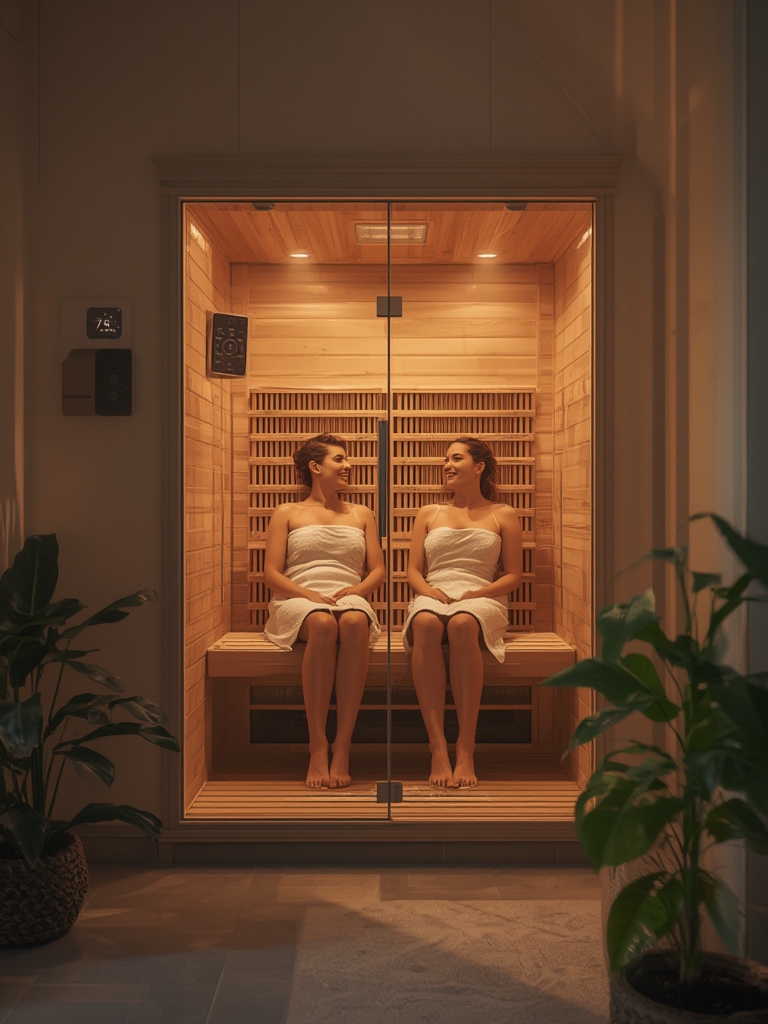
Medical research constantly reinforces the benefits of infrared saunas for pain relief and relaxation, though large-scale residential studies remain limited (source).
Conclusion
The home infrared sauna room market is expanding rapidly, fueled by wellness priorities and accessible DIY kits. Deciding between a portable unit and a fixed cabin depends entirely on your available square footage, energy capacity, and budget. Be highly critical of installation complexity and recognize the recurring utility costs. If you carefully align your electrical layout with a premium product, you can successfully build a highly functional wellness space over a single weekend.
Take action: Measure your room’s layout, evaluate your electrical panel, and define your family’s needs. Compare the top-tier kits available and prepare your space accordingly.
My Honest Verdict
I absolutely value the convenience of having an infrared sauna room right at home. Being able to step into a warm, deeply relaxing session after a long workday—without having to commute to a commercial spa—is a highly practical upgrade that genuinely improves my daily routine.
However, I must emphasize that the compact footprint of these DIY kits means legroom can feel severely restricted for taller individuals. If you are opting for the standard 2-person model, I strongly advise testing similar dimensions to gauge your comfort limits before committing to the purchase.
FAQ
How much will it cost to install a 2-person infrared sauna room at home?
High-quality DIY sauna kits for two people start around $1,100 and escalate to $4,000, excluding tools or essential electrical modifications. Comprehensive professional installations range from $3,500 to $8,000 based on structural and electrical requirements. Ensure you budget appropriately for delivery fees and future panel replacements.
How much electricity will an infrared sauna room use each month?
Standard 2-person infrared saunas draw 1.6–1.9 kWh per hour. Utilizing the unit for 30 minutes daily adds approximately $10–$18 per month to your utility bill, though actual expenses fluctuate based on local electricity rates and usage frequency.
Do you need special permits or codes for installing an infrared sauna room in the U.S.?
Basic plug-in models rarely require specialized permits. However, hardwired systems or significant panel upgrades typically mandate electrical permits and municipal inspections. Always verify local code requirements prior to installation to maintain your insurance compliance.
Does adding an infrared sauna room increase my home’s property value?
There is no empirical evidence to suggest a fixed sauna room measurably increases real estate value. Portable units offer zero impact. While a professionally integrated built-in model might attract a niche buyer, many property owners opt to dismantle them prior to a sale.
What are the day-to-day maintenance requirements for an infrared sauna room?
Routine operations demand minimal upkeep. You must wipe down all benches and panels post-use and monitor vents for dust accumulation. Expect to replace internal panels and electronics after five to ten years, and be aware that wooden structural components can warp if subjected to high humidity without proper ventilation.


[…] Air purification is most effective when executed as part of a comprehensive property utility overhaul. If you are capitalizing on ADU garage conversions, installing a dedicated in-duct air scrubber early in the framing phase guarantees high indoor air quality for prospective tenants. When upgrading specific utility spaces, transition completely to high-efficiency systems. Installing a modern heat pump water heater alongside a compact ventless washer dryer aggressively reduces total energy consumption. Support these mechanical improvements defensively by installing waterproof SPC flooring and organizing loose maintenance equipment inside heavy-duty storage cabinets. Furthermore, enhancing acoustic isolation via home soundproofing panels and modernizing surfaces with precision fluted wall panels yields a completely refined, high-performance environment, culminating perhaps with a luxury wellness addition like an infrared sauna room. […]