

Disclosure: As an Amazon Associate, we earn from qualifying purchases. This means we may receive a small commission at no extra cost to you if you click our links.
Whole home air purification fundamentally changes how property owners manage indoor environmental quality. Rather than relying on scattered standalone units, integrating commercial-grade filtration into your central HVAC system provides sustained, automated respiratory protection. This guide details exactly what these integrated systems deliver, exposes common installation obstacles, and outlines the precise steps necessary to execute this mechanical upgrade successfully.
Key Takeaways
- In-duct purification systems drastically improve baseline indoor air quality, yet no single consumer configuration completely eradicates 100% of microscopic pathogens or VOCs.
- Retrofitting older homes requires substantial upfront capital. Existing mechanical compatibility, ductwork condition, and required structural modifications are heavily underestimated by most buyers.
- Long-term system efficacy depends entirely on a rigid maintenance schedule. High-performance filter replacements dictate the complete total cost of ownership over the equipment lifespan.
What Is Whole Home Air Purification?
Whole home air purification denotes high-capacity filtration units spliced directly into a residential HVAC infrastructure. These in-duct assemblies strip particulates, biological allergens, and volatile organic compounds from the air column as it cycles through the property structure.
The market demand for these mechanical additions is accelerating sharply. Industry data indicates the US HVAC air purifier sector reached $402.5 million in 2024, forecasting sustained growth into 2025 (P&S Market Research).

Unlike portable towers restricted to localized square footage, centralized purification leverages your existing ductwork network to distribute scrubbed air evenly across every room. This represents a mandatory upgrade for properties housing individuals with severe asthma or chronic respiratory sensitivities. However, performance benchmarks fluctuate dramatically across hardware tiers. Official EPA guidelines confirm that even ultra-premium residential installations cannot eliminate all airborne pollutants (EPA: Air Cleaners & Air Filters for Home).
Holistic Property Utility Upgrades
Air purification is most effective when executed as part of a comprehensive property utility overhaul. If you are capitalizing on ADU garage conversions, installing a dedicated in-duct air scrubber early in the framing phase guarantees high indoor air quality for prospective tenants. When upgrading specific utility spaces, transition completely to high-efficiency systems. Installing a modern heat pump water heater
alongside a compact ventless washer dryer aggressively reduces total energy consumption. Support these mechanical improvements defensively by installing waterproof SPC flooring and organizing loose maintenance equipment inside heavy-duty storage cabinets. Furthermore, enhancing acoustic isolation via home soundproofing panels and modernizing surfaces with precision fluted wall panels yields a completely refined, high-performance environment, culminating perhaps with a luxury wellness addition like an infrared sauna room.
How to Add Whole Home Air Purification: Step-by-Step Guide
- Assess Your Current HVAC System
Audit the chronological age, blower motor capacity, and existing filter housing dimensions. Systems manufactured prior to 2010 frequently lack the static pressure tolerance necessary to push air through dense HEPA substrates, necessitating an expensive blower upgrade prior to purifier installation. - Research and Select the Correct Architecture
Identify your primary filtration objective. Specifying a premium whole-home in-duct HEPA air purifier excels at capturing micro-particulates, whereas heavy carbon-activation units target persistent chemical VOCs. Consult current technical breakdowns on filtration dynamics via Future Market Insights to verify your selection. - Require Professional Airflow Diagnostic Testing
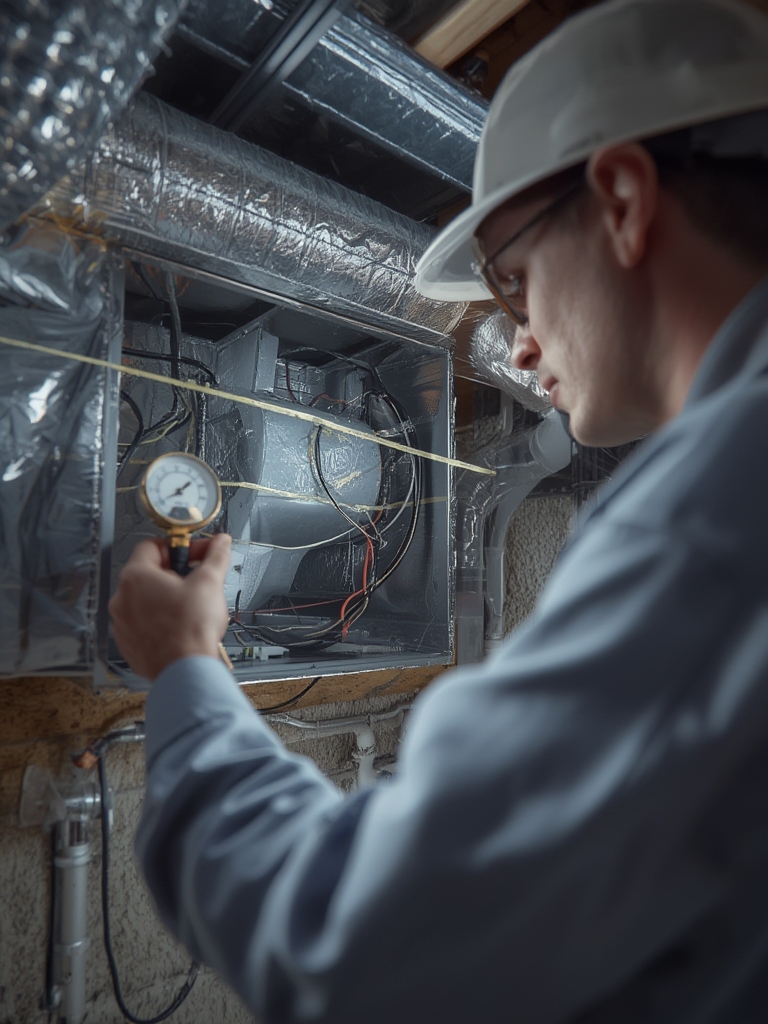
Contract a licensed HVAC technician to execute a comprehensive velocity test using a precision handheld digital airflow diagnostic meter. Bypassing this step risks severe evaporator coil freeze-ups and permanent compressor failure due to insufficient draft. - Calculate the Total Lifecycle Financial Impact
Evaluate the upfront capital expenditure against consecutive operating costs. Generate a rigid five-year forecast that includes the base hardware, specialized sheet metal fabrication, municipal permits, and the biannual purchase of proprietary filter cartridges. - Schedule the Mechanical Installation
Secure a certified mechanical contractor. Modifying central ductwork is strictly a licensed procedure. Anticipate a minimum of six to eight hours of complete HVAC downtime while the housing is physically integrated and hermetically sealed into the return plenum. - Enforce a Strict Maintenance Schedule
Operational failure is guaranteed without proactive filter management. Purchase a high-performance MERV 11–13 replacement filter multi-pack upfront. Establish recurring digital calendar reminders to swap media every 90 to 180 days, adjusting frequency to track local pollen surges or intense home occupancy. - Conduct Empirical Verification Testing
Do not rely on subjective perception. Utilize an advanced handheld indoor air quality and VOC monitor to record numeric baseline readings before equipment commissioning, and compare them against data logged 48 hours post-installation.
Advanced Analysis & Common Pitfalls
Despite heavy commercial marketing, whole-home filtration introduces severe mechanical liabilities if engineered improperly. These specific systemic failures consistently undermine residential installations:
- Incomplete Pathogen Elimination: Federal data confirms standard in-duct HEPA protocols capture larger particulate mass effectively but remain highly porous against specific volatile chemical compounds and micro-viruses (EPA Guidance).
- Catastrophic Air Volume Restriction: Mounting dense particulate media inside older air handlers guarantees static pressure spikes. This starves the blower motor, triggering immediate high-limit switch lockouts and rapidly deteriorating the heat exchanger.
- Gross Maintenance Negligence: High-capacity systems compound dust loads rapidly. Delaying standard filter replacements actively suffocates the HVAC system and transforms the trapped organic debris into a highly active bacterial breeding ground within the ducts.
- Ambiguous Hardware Performance Documentation: Definitive, independent field trials directly comparing aggressive electrostatic precipitation against thick pleated media configurations in typical residential houses are currently negligible (FMI 2024 Report). Determine hardware selection using specialized environmental engineering data, not basic sales brochures.
- Severe Implementation Invasiveness: Marketing frequently claims effortless integration. Realistically, executing an airtight housing mount necessitates complex structural ductwork surgery, requiring advanced sheet metal fabrication tools and highly trained labor.
- Marginal Returns on Tight Construction: Installing aggressive mechanical filtration into modern properties already operating with high-efficiency air exchangers produces only negligible, statistically irrelevant upgrades to an inherently scrubbed environment.
Evaluate exact hardware specifications against your property footprint:
| Component Base | Central In-Duct HEPA System | Portable Standalone Array | Baseline OEM HVAC Filtration |
|---|---|---|---|
| Area of Effect | Systemic multi-zone distribution (FMI) | Restricted single-room isolation (Market.US) | General property circulation (EPA) |
| Capture Efficiency | Exceptional dense particulate interception (FMI) | High localized efficacy utilizing active carbon boundaries | Low yield; primarily intercepts heavy debris (EPA) |
| Structural Requisite | Demands complex duct integration and professional wiring (Grand View Research) | Zero modification; operates independently | Pre-integrated slot replacement standard across industry (ACDirect) |
| Economic Baseline | $238.1M sector; aggressively expanding at 5.8% CAGR | Dominant sector commanding $8.6B market share | Baseline industry standard scaling steadily toward $511.8M |

Conclusion
Whole home air purification fundamentally outclasses standalone room purifiers by leveraging the immense volumetric transfer capacity of modern central air systems. However, executing this upgrade mandates exacting dimensional planning, unyielding airflow diagnostics, and professional fabrication. A filtration box is not a fire-and-forget accessory. Calculate the stringent ongoing maintenance
expenditures, secure detailed labor quotes, and immediately verify your current blower capacity. If you demand pristine indoor air quality and are prepared to finance the subsequent upkeep, engage a certified HVAC technician to calculate your unit integration protocol today.
My Honest Verdict
Upgrading to a whole-home purification setup was a noticeable game-changer for reducing dust accumulation on surfaces and knocking out lingering cooking odors fast. I highly recommend taking the time to schedule professional installation rather than attempting a DIY duct modification, as getting the airflow balance perfect is essential to performance.
Keep in mind that the thick replacement filters cost significantly more than standard pleated ones, so you need to strictly budget for those continuous swaps to avoid suffocating your blower motor down the line.
FAQ
Does whole home air purification eliminate all indoor pollutants?
No. According to the EPA, no air purifier system — including whole home HVAC-integrated models — can remove all indoor air pollutants. They primarily reduce particulates, allergens, and some chemical compounds but are less effective against all types of VOCs or viruses.
How much does it cost to retrofit an existing HVAC with a whole home air purifier in 2024?
Exact prices vary and no definitive 2024 average is published. Typically, install plus the first year of maintenance and filters ranges from several hundred to a few thousand dollars depending on system choice, home size, and labor costs. Always get multiple bids and anticipate bonus costs if your ductwork needs updates.
How often should filters be replaced in a built-in system?
Most whole home air purification systems require filter replacement every 6-12 months, but this can vary with air quality, pets, or heavy use. Skipping filter changes reduces efficiency and can even allow odor and bacteria buildup.
Are these systems compatible with older HVAC units?
Compatibility depends on your system’s airflow capacity and age. Many older systems cannot handle the air pressure drop of high-efficiency filters, and some may need motor or duct upgrades. Get a professional assessment before committing to an in-duct installation.
What’s the difference between whole home air purification and traditional air filters?
Traditional HVAC filters mainly trap larger dust and allergens but do not target smaller particles or pathogens. Whole home air purifiers use specialized filters (like true HEPA or activated carbon) and treat air throughout the house, offering broader but not absolute protection.